




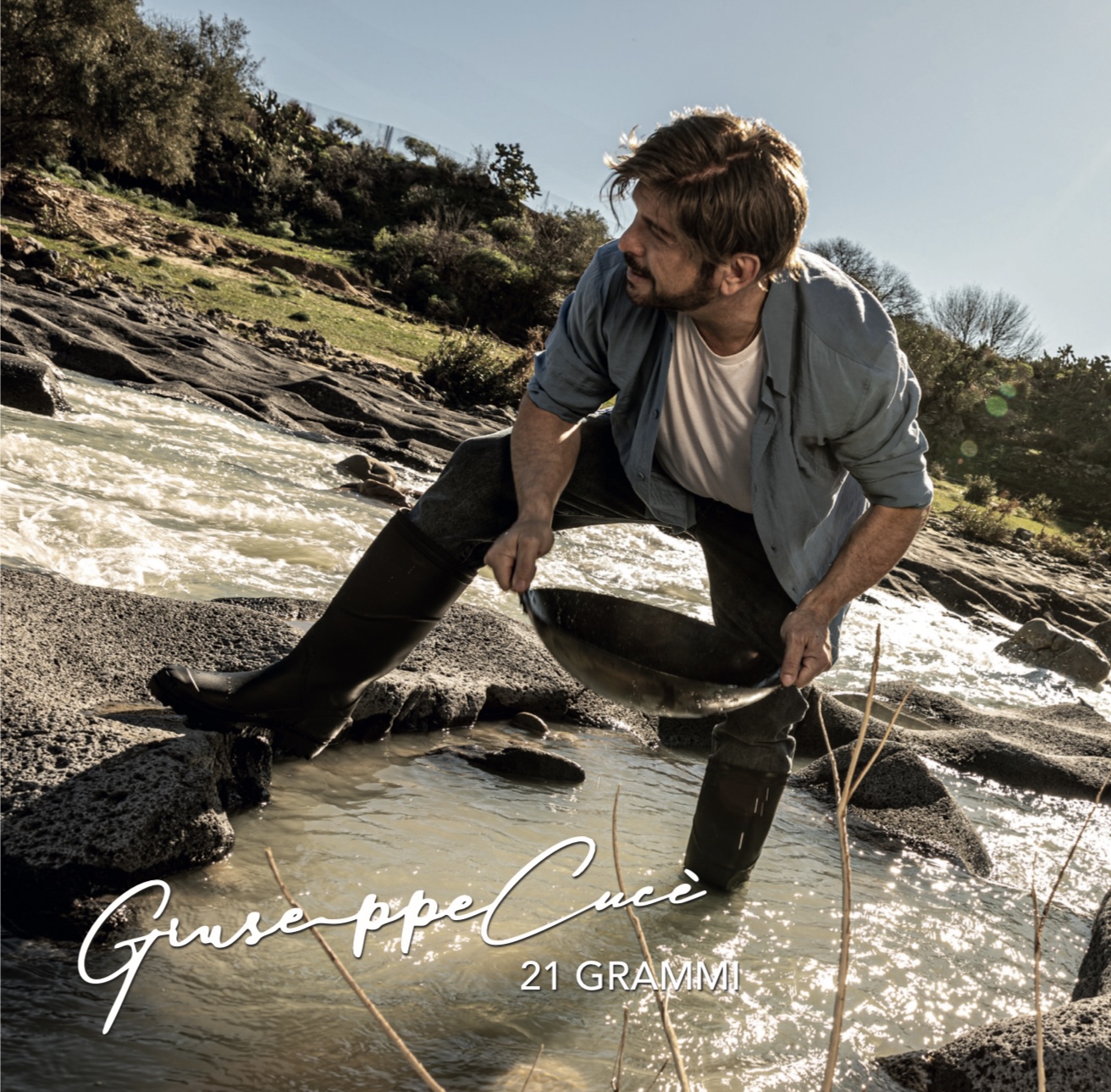
Giuseppe Cucè’s 21 grammi opens like an intimate cinematic journey, immediately immersing the listener in a space where orchestral warmth meets Mediterranean lyricism. From the first track, “È tutto così vero,” Latin-inspired rhythms, bright horns, and layered percussion create a festive yet sophisticated soundscape, establishing a vibrant entry point for the album’s exploration of the human soul. Cucè’s voice weaves effortlessly through this arrangement, conveying both joy and reflection.
The second track, “Ventuno,” contrasts sharply with its predecessor, introducing a contemplative atmosphere. Anchored by arpeggiated guitar and subtle percussion, the track moves at a reflective pace. Cucè’s tender vocal delivery conveys introspection, and the restrained orchestral layers allow the emotional weight of memory and transformation to emerge. The album’s sequencing balances energetic tracks with these calmer moments, keeping the listener engaged across varied moods.
“Fragile equilibrio” offers dynamic movement with its uplifting piano, percussion, and strings, creating tension and release that mirror the thematic fragility in the lyrics. Cucè’s phrasing conveys both vulnerability and resilience, capturing the delicate balance the song title suggests. Similarly, “La mia dea” employs piano-led balladry enriched by violin and subtle percussive textures, demonstrating orchestral depth while expressing devotion and longing.
“Cuore d’inverno” stands out as an emotionally expansive centerpiece. Gentle strings and timpani pulses create a cinematic backdrop, allowing Cucè’s vocals to convey endurance and quiet strength. The orchestration grows with the track, giving a sense of progression from reflection to catharsis. “Tutto quello che vuoi” introduces a lively acoustic guitar rhythm and buoyant percussion, a contrast that injects playfulness without diminishing the album’s emotional continuity.
As the album moves into “Una notte infinita,” synth pads and soft harmonic layering create a nocturnal, meditative tone. Cucè’s vocals remain intimate, emphasizing nuance over spectacle. Closing with “Di estate non si muore” and the Latin version of the opening track, “El mundo es verdadero,” the album concludes with celebration and closure. Rhythmic energy, melody, and orchestral flourishes leave the listener with a sense of completion, tying the conceptual arc together while reinforcing the recurring themes of soul, transformation, and emotional honesty.
21 grammi is a masterful exploration of identity and reflection. Each track flows organically into the next, combining analog instrumentation, orchestral textures, and Mediterranean-inflected melodies. Cucè’s songwriting captures the invisible weight of human experience, translating it into sound that is both intimate and universal. From lively Latin rhythms to tender ballads, the album delivers an immersive, emotionally nuanced journey, rewarding attentive listening and repeated engagement.